"Please Regulate Me" Oh Wait!
Civilization Needs Elon Musk
### "Please Regulate Me" Oh Wait!
#### Civilization Needs Elon Musk
## Editorial
### Blowing the Balloon
SpaceX is now a public company worth over $2 trillion. Most commentators are grimacing at the valuation and the personal net worth of Elon Musk (the first trillionaire in the world).
Brad Gerstner on X showed a reason not to think like that. A picture tells a thousand words, or in this case a trillion:
[Brad Gerstner@altcap🇺🇸💰🚀 9:37 PM · Jun 11, 2026 · 252K Views
*
150 Replies · 174 Reposts · 2.22K Likes](https://x.com/altcap/status/2065186641828778196?s=20)
What is Brad saying out loud here? Good investors price the future value of the asset they are investing in, not its current value. SpaceX is worth over $2 trillion today because it is believed it will be worth many times that in future. None of the early investors are selling shares today. Indeed, they can’t because of various lockup provisions. But even when unlocked, they will be likely buyers, not sellers.
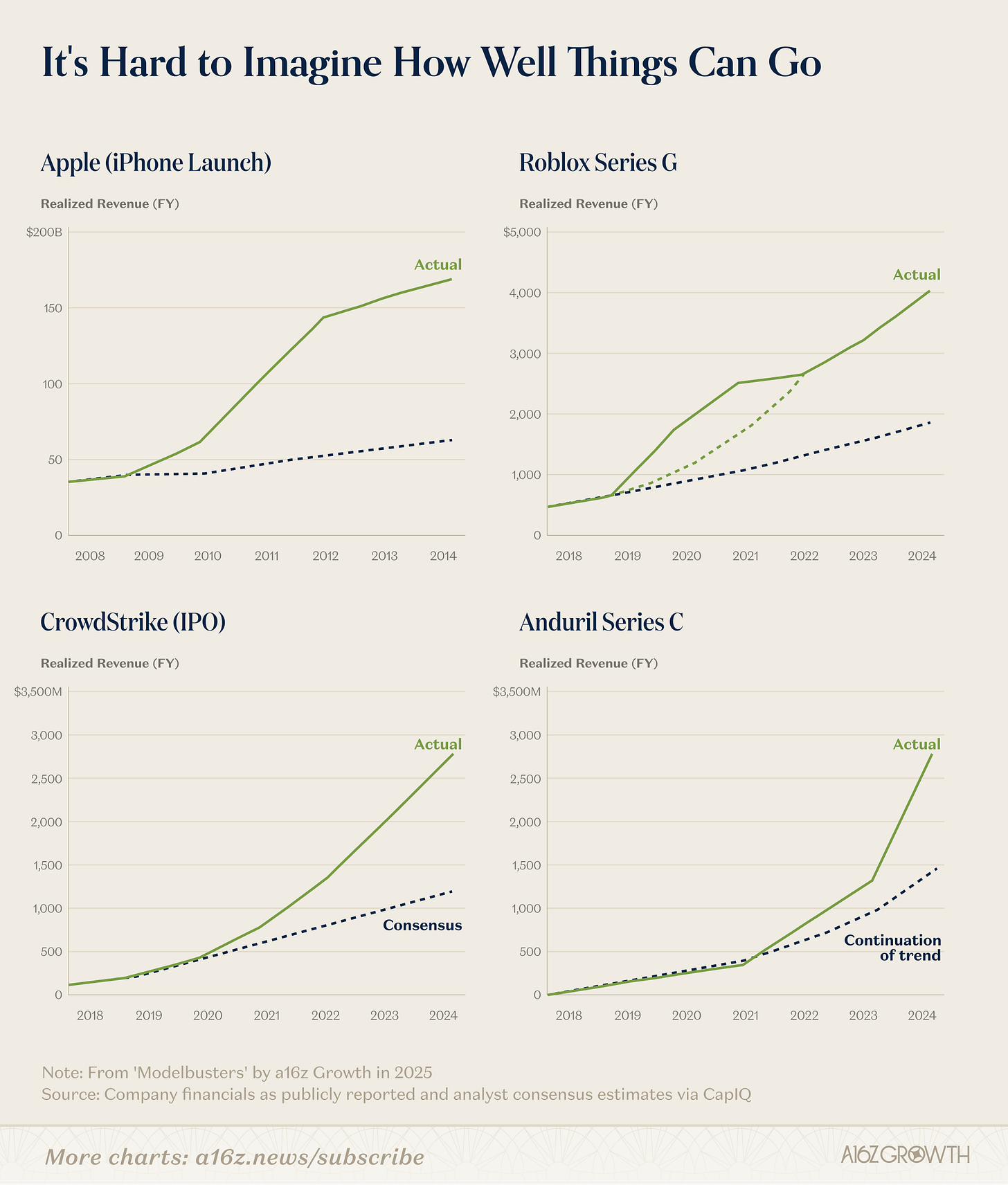
This coincides with an excellent piece by David George from Andreessen Horowitz that attempts to characterize what kind of a founder a late stage company requires.
> “Growth-stage venture” has emerged as its own asset class, and we think it’s the most important asset class in the world. But we also think that most people misunderstand what it’s about. It’s not just a structural change in fundraising, or about valuations, or staying private. Late-stage venture is about late-stage _founders._ It’s about a specific kind of _person_ , who can keep deploying dollars attractively, indefinitely.
Deploying dollars attractively, indefinitely means investing in growth.
[](https://substackcdn.com/image/fetch/$s_!ASYq!,f_auto,q_auto:good,fl_progressive:steep/https%3A%2F%2Fsubstack-post-media.s3.amazonaws.com%2Fpublic%2Fimages%2F3a94186f-cdf7-4f23-bba1-8b6042a83235_2000x2352.png)
> Founders are not afraid of pressure to perform; not if they’ve made it this far. What founders don’t like is the _pressure to do the consensus thing_ , rather than make the bets that would result in that continued 100% growth, that pervades analyst calls and shareholder feedback. It goes against their instincts about how to make good decisions, and about where the alpha in the company comes from. And each generation of founders learns from the previous one; that’s why they’re staying private longer.
And that really is the story of issue #21 of That Was The Week for 2026.
SpaceX is early in its life at 25 years old. Anthropic and OpenAI, both of which filed confidentially for IPOs in the past few days, are similar, but even younger. Both will be worth a lot of money in future, and $1 or 2 trillion today will look small in future.
The spending on data centers, on earth and in space, is the current version of Jeff Bezos running a loss at Amazon for decades. It is not making a loss, it is making an investment.
Excuse the analogy but ….
When your breath blows up a balloon, you are not losing breath. You are investing breath in the growth of the balloon.
So long as it keeps expanding, you keep blowing.
If you are insecure about it bursting you will stop blowing, and you will have a smaller balloon than the blower personality.
Dario Amodei’s essay - [Policy on the AI Exponential](https://darioamodei.com/post/policy-on-the-ai-exponential) \- clearly places him as not a balloon blower. Whereas Sam Altman at least attempts to play the role of a balloon blower (but ultimately fails) in [Built to benefit everyone: our plan](https://openai.com/index/built-to-benefit-everyone-our-plan/).
*
**Breaking News
** The Government has forced the [suspension of Anthropic’s Fable/Mythos v5](https://www.anthropic.com/news/fable-mythos-access) models. Anthropic is complaining, despite Dario’s essay this week [begging for regulation](https://darioamodei.com/post/policy-on-the-ai-exponential) and prevention.
*
Musk, on the other hand, keeps on blowing up the balloon. And rising…
For these reasons today is not a day to chastise Elon Musk for being the richest person ever. It is a day to celebrate risk, and the wealth it creates. Not the personal wealth but the societal wealth. And also the indomitable personality traits that make it possible. It is not disgusting, it is testimony to what is possible.
### Growth Needs a Plan
Then there is Europe, and also California. They have something in common. Neither likes unbounded wealth. Both seek to curtail, slow down, and seize some or much of it. Francis Fukuyama’s essay on Liberal Values, and many of this week’s essays are written from the point of view of states, political systems, and governance.
The Interview of the Week between Andrew Keen and Jonathan Weber - ‘Save San Francisco’s Soul’ discusses his book ‘The City on the Edge’ and is also part of this discourse on the future.
Strangely the SpaceX IPO and those that will follow contain answers to some of the questions we are all asking. The main one is about life, and the experience of life we should all expect from the future.
Poor governance - and Europe and San Francisco have an abundance of it - is a symptom of poor vision. Last week we spoke about the lack of an ‘End Game’ in most discussions of the future.
San Francisco should benefit from multi-trillion IPOs. Housing, education, health, leisure should all be boosted by the production of value. The same holds true for Europe, and by proxy, really everywhere. But that requires a plan for embracing growth, and then mechanizing how it supports a healthy civilization. The reaction to Musk indicates how hard it is for many to embrace growth and the wealth it throws off.
Complaining (whining) has never been an attractive character trait. It is even worse when unaccompanied by any plan to change things.
Apple understood part of this at WWDC better than many commentators did. I do not think Apple won AI in the frontier-model sense, and I do not think that matters very much. What matters is that Apple is building useful things for the future.
If Google has more raw capability and OpenAI has more narrative momentum, Apple may still own the daily interface if it can make AI feel calm, local, useful, and subordinate to the user. That is capacity too. It is not benchmark capacity. It is adoption capacity. And it is using capability to deliver real benefits. Governance could learn a lot from Apple’s product and go-to-market teams.
On the more thoughtful side, Paul Krugman is right that powerful technologies do not automatically translate into productivity booms, wage growth, or social progress. History is full of lags, bottlenecks, and wrong analogies. Sangeet Paul Choudary is right to warn that efficiency gains can shift bargaining power away from workers if platforms capture the customer relationship and the system of record. Freddie deBoer is right that “go into the trades” is not a serious labor-market answer unless we say which trades, under which institutions, with which rights and protections. Rebecca Haw Allensworth’s licensing argument adds the companion point: skills do not matter much if insiders can make entry expensive, slow, and exclusionary.
So yes, the skeptics have a serious case. AI could produce more concentration, more surveillance, and more labor insecurity long before it produces abundance. And if complaining is the bulk of the response, bad things may happen.
### Planning Beats Complaint
This is not only a city, continent or technology story. It is becoming a civilization story.
Europe 2031 makes the point that values without compute, energy, talent, data centers, adoption, and political speed become rhetoric. Not to mention investment.
Francis Fukuyama argues that Europe cannot defend liberal values by retreating into ethnic or religious nostalgia. That is the wrong point. Europe needs to take control of investing in a plan for the future.
The same with John O’Farrell. He brings the same problem home to American AI politics. If venture money is used to pre-empt democratic debate before lawmakers understand the technology, then “innovation freedom” starts to look less like openness and more like regulatory capture. Technology cannot wait for politicians to catch up. That would be at the expense of society. But politcians do have to catch up.
Complaint is a negative. Whining is its form. Planing is empowering and acting on the plan is the form. That is why Elon Musk symbolizes what is required. He is necessary, but not sufficient. Next up? Planning how society benefits.
*